Data Repair Icons
First Impressions: A Clean, Versatile Design
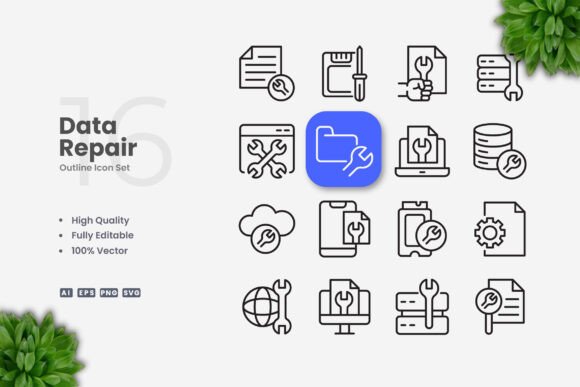
Data Repair Icons immediately strikes a balance between simplicity and functionality. The design is minimal yet expressive, with clear lines and a modern aesthetic that feels both professional and approachable. As an embroidery designer, I appreciate the clean layout and lack of unnecessary details—this makes it highly adaptable for various projects. The icons are well-proportioned and maintain their clarity even when scaled down, which is crucial for small hoop sizes or intricate detailing.
Real-World Use Case: Custom Embroidered Tote Bag
Let’s imagine a scenario where I’m preparing a custom embroidered tote bag for a local craft fair. The client wants a subtle yet meaningful design that reflects data repair themes—perhaps for a tech-savvy audience or a boutique that sells personalized tech accessories. Data Repair Icons would work well here as a decorative element. They can be placed on the front or back of the tote, either as standalone icons or grouped together to form a cohesive visual statement.
The icons’ clean lines and consistent style make them ideal for embroidery. When stitched, they retain their sharpness and readability, even on fabric. This is especially important for a tote bag, where the design needs to stand out without overwhelming the overall look. Their versatility allows them to fit seamlessly into a variety of branding styles, from minimalist to slightly more detailed.
Embroidery Performance: What Works Well
Data Repair Icons perform admirably in most embroidery scenarios. They are particularly well-suited for custom apparel, such as sweatshirts, t-shirts, and caps, where clarity and legibility are key. The design’s simplicity ensures that even on larger garments, the icons remain recognizable and visually appealing.
For personalized gifts like pillow covers, tea towels, and holiday items, the icons add a touch of sophistication without being too busy. They also work well for commercial embroidery projects, including digital embroidery files used by Etsy sellers and small shop products. The design’s adaptability means it can be resized, recolored, and adjusted to suit different applications.
Where to Be Cautious: Potential Challenges
While Data Repair Icons are versatile, there are situations where they might require extra attention. For example, on dark fabrics or textured surfaces, the contrast may not be as strong, potentially affecting visibility. In such cases, choosing the right thread colors and ensuring proper stabilizer use becomes critical.
Similarly, on stretchy or thin fabrics, the design might lose some definition due to fabric movement or poor stitch density. It’s essential to test the design on scrap fabric first and adjust the hoop size accordingly. Dense stitch areas or intricate corners could also pose challenges, requiring careful review of the stitch density and running stitch settings.
Visual Appeal and Customer Trust
The visual appeal of Data Repair Icons contributes significantly to the overall quality of the finished product. Their clean, modern look aligns well with contemporary design trends, making them suitable for both handmade products and commercial embroidery.
From a customer perspective, the clarity and professionalism of the design enhance brand consistency and buyer engagement. Whether used on a personalized gift or a boutique branding project, the icons help create a cohesive and trustworthy impression. This is especially important for craft business owners and small shop products looking to build brand recognition.
Design Notes for Embroidery Professionals
As an embroidery designer, I recommend several practical steps before using Data Repair Icons in a real project:
- Test on scrap fabric: Always check how the design looks on actual fabric before committing to a final product.
- Review thread color contrast: Ensure that the chosen thread colors provide sufficient contrast against the fabric background.
- Confirm stitch density: Adjust the fill stitch and satin stitch settings to ensure clarity and durability.
- Inspect small details: Pay close attention to any fine lines or text to ensure they remain visible after stitching.
- Use proper stabilizer: Choose the right type of stabilizer to prevent puckering and ensure smooth stitching.
- Check licensing terms: Confirm that the design is licensed for commercial use if you plan to sell finished items or digital products.
- Test in black and white: This helps identify any potential issues with contrast or detail before adding color.
- Compare light and dark backgrounds: Ensure the design works across different fabric types and lighting conditions.
Final Thoughts: A Reliable Choice for Real Projects
Data Repair Icons are a reliable choice for designers and crafters looking for a clean, versatile design that works across multiple platforms and applications. Whether used in personalized gifts, commercial embroidery, or digital product previews, they offer a balance of simplicity and functionality that enhances both the visual appeal and practicality of the final product.
With the right preparation and attention to detail, these icons can elevate your handmade creations, strengthen your brand, and create a lasting impression on your customers. As always, testing and reviewing are key steps in ensuring that every design meets the high standards expected in the world of embroidery and creative entrepreneurship.